
Recap videos and copyright: what to know before uploading
Recap videos use panels and stories someone else owns. Here is how fair use, Content ID and copyright strikes work, and the habits that keep a recap channel safer.
Copyright for recap videos is the question of whether a video may use panels, frames and story from a manga, manhwa or anime without permission. A recap is a summary with narration over images from the original work, and the images belong to the publisher or the author. In the United States, as of 2026, the legal answer depends on fair use, a defence that courts weigh case by case. On YouTube, the platform owned by Google, the practical answer depends on Content ID claims and copyright strikes. For example, under the strike rules from YouTube, three copyright strikes within 90 days can end a channel. The guide first explains the four fair use factors in plain words, then how YouTube enforces copyright, and finally the habits that lower risk. The guide is general information for creators, not legal advice. For a specific series or a specific claim, ask a copyright lawyer.
What are the four fair use factors for recap videos?
Fair use is a part of U.S. copyright law, Section 107, that allows some use of a work without permission. Courts weigh four factors, according to U.S. Copyright Office guidance on the fair use page. First, the purpose and character of the use, including whether the use is commercial and whether the use is transformative. The Copyright Office says transformative uses "add something new" and do not substitute for the original. Second, the nature of the work, since creative works such as comics from Japan or Korea get strong protection. Third, the amount used, where even a small part can count if the part is the "heart" of the work. Finally, the effect on the market for the original. In practice, the hard question for recap videos is the fourth factor. A chapter retold with every panel can replace reading the chapter, which weighs against fair use.
How does YouTube enforce copyright on recap videos?
YouTube enforces copyright in two separate ways. The first is a claim made using Content ID. The YouTube Content ID help page from Google says a claim can block the video, monetize the video by running ads for the owner, or only track viewing statistics, and the result can differ by country. A claim is not a strike. The second is a copyright strike, which comes from a legal takedown request. Under the copyright strike rules, a strike expires in 90 days if the creator completes Copyright School and the channel has fewer than 3 strikes. Channels with 3 copyright strikes in 90 days are subject to termination, and the owner cannot create new channels. For instance, a channel posting daily episodes from one publisher can collect several takedowns in one week. One claim is a warning sign; a pattern of claims from one series means stop and rethink.
Is giving credit or a disclaimer enough for recap videos?
Credit and disclaimers are good manners, not permission. The YouTube fair use page from Google says giving credit "won’t by itself" turn a non-transformative copy into fair use. The page also says phrases such as "I do not own" or "no infringement intended" do not mean the creator has permission. No magic words apply fair use automatically. Still, the description should name the series, the author and an official place to read. Credit helps viewers and shows good faith. Credit just does not replace the work that makes recap videos transformative: your own summary, analysis and opinion, with panels chosen to support a point. For example, a description line such as "Read the official release on Webtoon" pairs well with commentary, while a long disclaimer with no commentary protects nothing. Finally, remember that YouTube copyright and monetization are separate, and both apply to the same upload.
Which habits lower copyright risk for a recap channel?
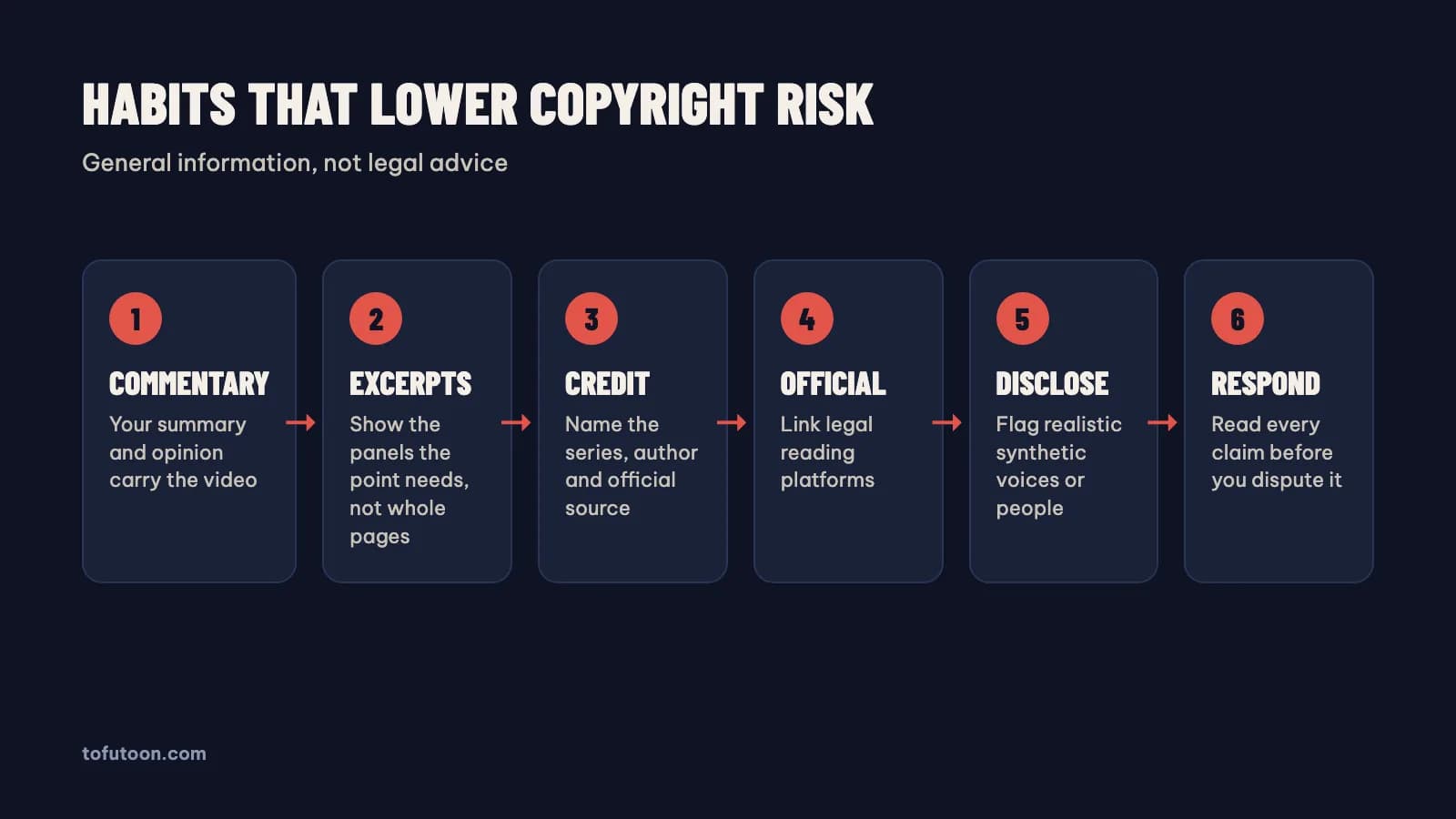
No habit removes copyright risk, but six habits lower risk and also make better videos. First, let commentary carry the video: your summary, your view on a choice, and comparisons with earlier arcs. Second, show the panels the point needs, not every page. Third, credit the series, the author and the official platform in the description. Fourth, link the legal release, which points viewers to the original. Fifth, disclose realistic synthetic content, such as a cloned voice of a real person, under the GenAI disclosure rules from YouTube (March 2024). Finally, read every claim before disputing a claim, because a dispute is a legal statement. Some publishers also state a policy on fan videos. In practice, when a publisher says no recaps, respect the policy and pick another series. The same six habits work for manga, manhwa and anime channels.
Where do recap tools like Tofu Image Text fit in?
Recap tools speed up production; recap tools do not change copyright. Tofu Image Text is a pay-once desktop app for Windows 10 or later and Apple silicon Macs (M1 or later). The app reads text from comic pages with OCR on the computer and can rewrite the dialogue into a script with your own AI key. Audio comes out as one file per chapter, with Edge voices from Microsoft, CapCut voices or offline voices. The faster workflow leaves more time for the part that matters for fair use: commentary. For instance, Tofu Image Text can draft the retelling of a chapter of 12 pages, and the creator then adds two or three paragraphs of analysis. First make sure you have the right to use each chapter, such as purchased copies for commentary, licensed works or your own comics. No comics are downloaded from any website by the app.
FAQ
Are anime recaps riskier than manga recaps?
Anime recaps face one risk that manga recaps do not: anime clips are video and audio, the kind of material YouTube matches using Content ID. The Content ID help page from Google says a copyright owner can set a match to block a video, monetize the video or track the views. Manga recaps use still panels, and manga panels are still protected works. In practice, a recap built from full anime episodes with the original soundtrack gives Content ID a lot to match. Short clips, your own narration and no original music make a smaller target. Neither format is automatically safe, and a short clip can still be claimed. For either format, first check the four fair use factors from the U.S. Copyright Office, since commentary helps both formats in the same way.
Can a recap channel be monetized on YouTube?
A recap channel can apply for monetization through the YouTube Partner Program, but YouTube checks two separate things before and after approval. The first check is copyright: a Content ID claim can send the ad revenue of a video to the copyright owner. The second check is the YouTube channel monetization policy. On July 15, 2025, YouTube renamed the "repetitious content" policy to "inauthentic content", which covers mass-produced or repetitive videos. Original commentary and editing choices help on both checks, for manga, manhwa and anime channels alike, and from the very first video. For instance, a channel that reads every chapter word for word with the same template can fail both checks at once. Read the [YouTube channel monetization policies](https://support.google.com/youtube/answer/1311392?hl=en) from Google before applying, and plan commentary into every episode from the first upload onward.
What happens after a copyright strike on a recap video?
A copyright strike removes the video and counts against the whole channel. The copyright strike rules from Google say a strike expires in 90 days if the creator completes Copyright School and the channel has fewer than 3 strikes. A retraction from the claimant or a valid counter notification can also resolve a strike. A counter notification is a legal statement. File one only when the use is truly fair or licensed. For example, panels from a series with a public no-recap policy do not justify a counter notification. Three strikes in 90 days put the account and every linked channel at risk of termination. First, pause uploads from that series while a strike is active.
Next step: before the next upload, check one video against the six habits above, and rewrite the script so commentary carries at least part of the episode. Then plan the full workflow in how to make manhwa recap videos. To spend less time on retyping and audio, see Tofu Image Text.